Someone asked me recently, with a slightly sarcastic edge: “So your horses don’t have a job?” And honestly? It’s a fair question. Just not quite the right one.
Because the moment we say, “horses need a job,” we’ve already assumed something. We’ve taken our own definition of what a job is – something assigned, timed, structured, with a correct outcome defined by whoever is in charge. And then we’ve placed that concept over an animal that lived for millions of years without it. – So maybe the better question is: what do horses actually have – when no one is defining their ‘jobs’ for them?
1. Wild Horses Don’t Have a Job. They Have ‘Embedded Function’
Watch a wild herd for long enough, and you’ll start to see things that look, on the surface, like roles or responsibilities.
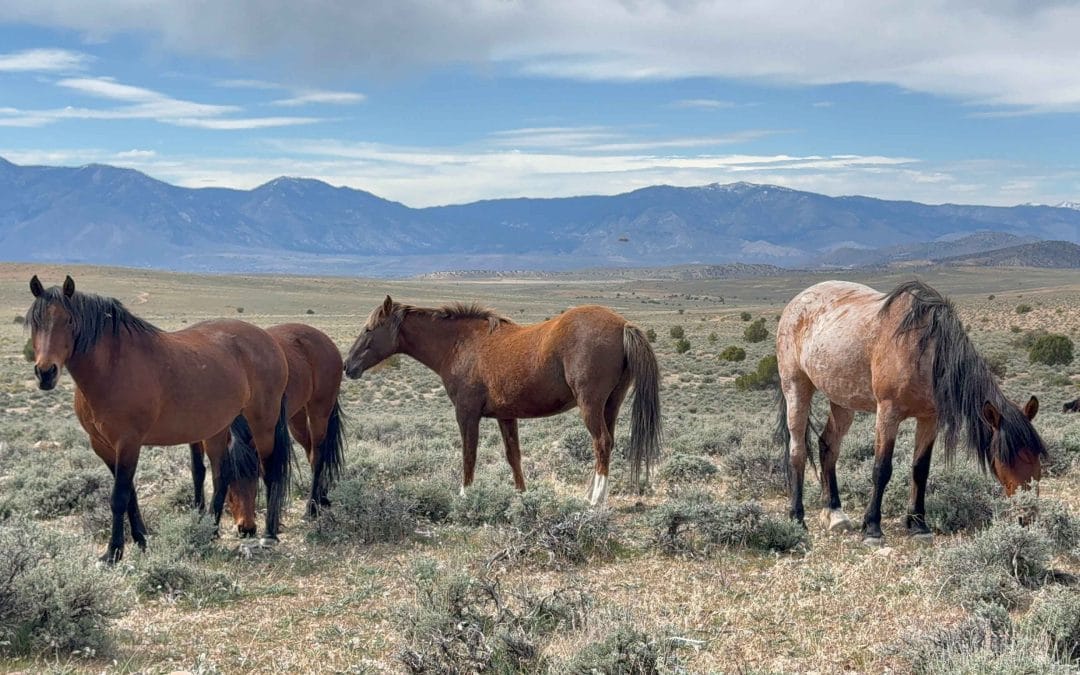
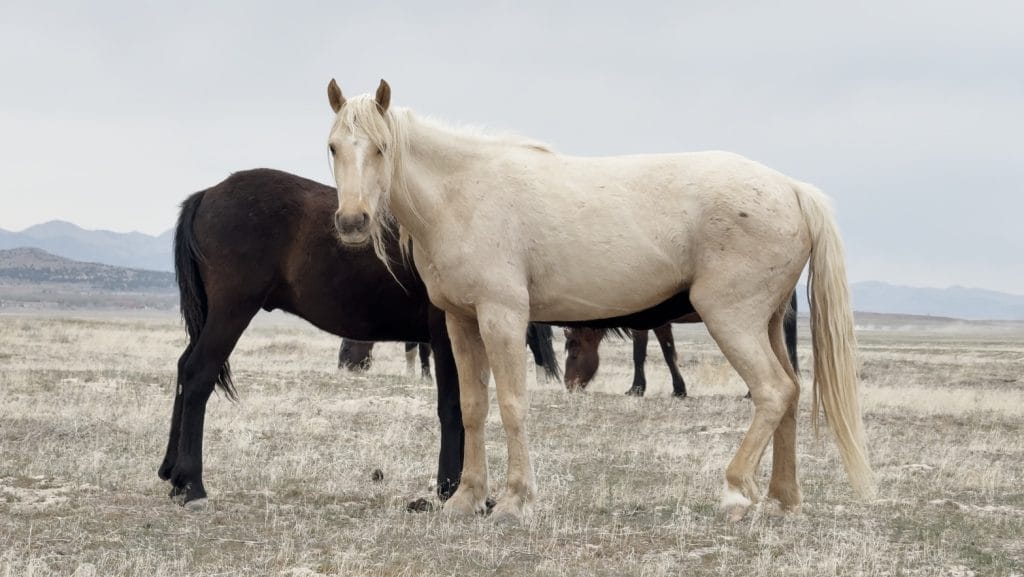
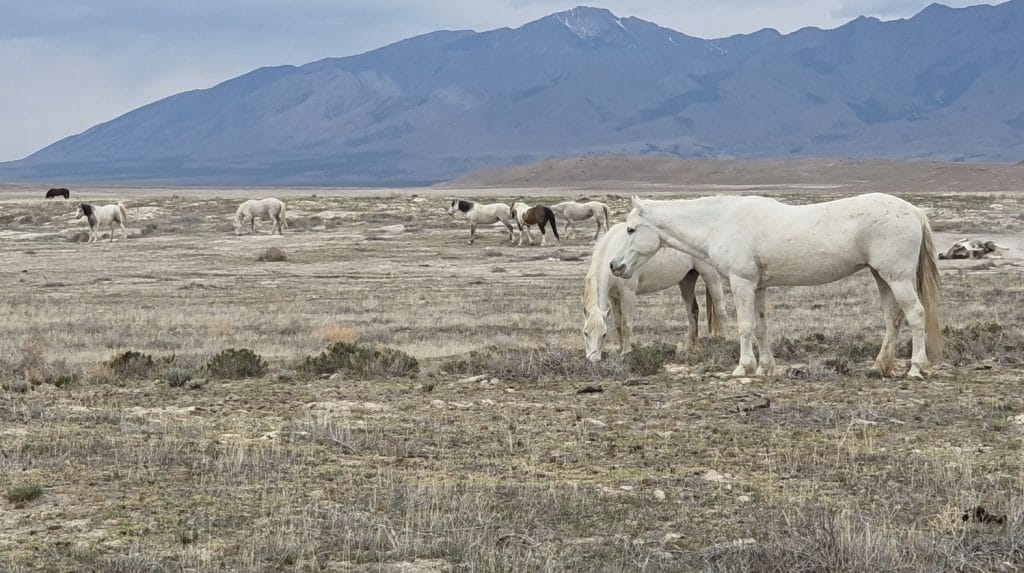
Mares often initiate movement towards water – not because it’s scheduled, but because they’re pregnant or nursing and their body knows what it needs. A stallion checks in with every band member daily, mediates conflict, and steps in when something needs to be managed. Younger horses scan the edges of the band while the rest of the herd grazes. Older ones offer orientation simply by where they stand and how they hold themselves. All horses, at some level, are involved in the collective awareness of safety – heads lifting, ears turning, a shared scanning of the landscape that never fully switches off.
And here’s what matters about all of it:
None of this is externally imposed. None of it is repetitive performance. And none of it is detached from meaning.
Everything connects directly to survival, to social belonging, to maintaining harmony, or simply to what’s relevant right now. The mare doesn’t move the herd towards water because it’s 4 pm and that’s her job. She does it because she knows what she needs. The others follow because a long shared history has shown them that her decisions are worth following. The stallion doesn’t check in with every herd member because it’s on a list somewhere. He does it because harmony is fragile, and he feels responsible for it.
I call this embedded function – meaning and behavior that arise from within a living system, not assigned from outside it.
Meaning comes first, and behavior follows. Relationship creates responsibility. Tasks are fluid, situational, alive. And no one designed them.
2. And Then There’s Our System
We define the task. We define the timing. We define what the correct outcome looks like. Even with positive reinforcement – which genuinely works and has real value – the impulse still comes from us. The behavior loop is still human-designed.
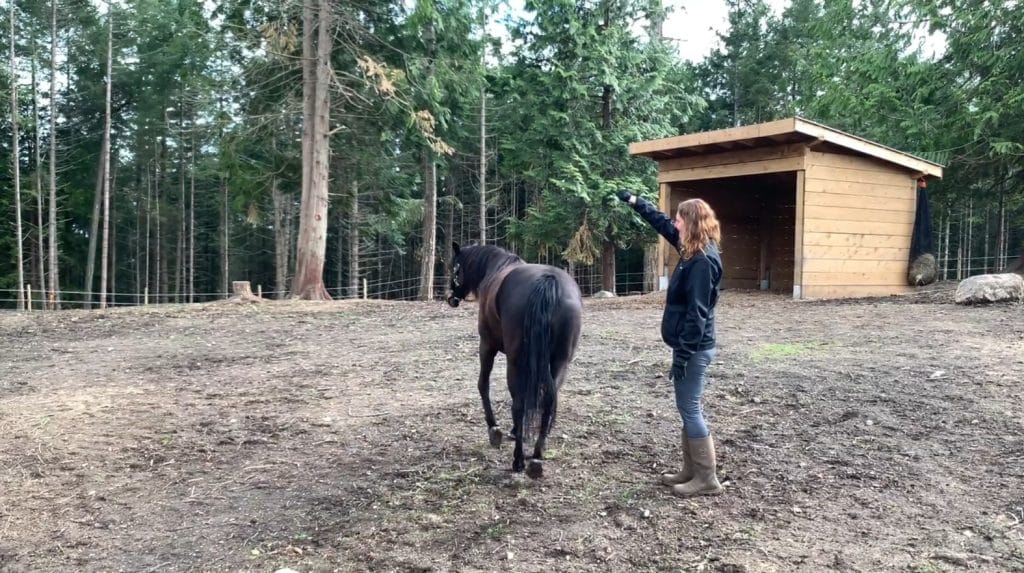
Here’s a thought experiment I keep coming back to.
Imagine someone came to your room where you live all by yourself – always at times you couldn’t predict. Took you somewhere for exactly one hour. During that hour, you were expected to respond correctly and immediately to a series of requests. If not, then… And you couldn’t make a single suggestion. Nothing you offered was acknowledged or even welcomed. And then you were brought back to your room.
Now imagine that happened regularly, for years.
What would you do, over time? You’d probably stop offering suggestions. There would be no point. Instead, you’d get very good at scanning your environment for cues – what is being asked of me right now, so I can respond correctly and avoid friction.
That’s not a job.
Yes, we call it a job. But if nothing you do ever changes the situation, it’s not a job. It’s compliance – adaptation to a system that doesn’t listen.
And this is what I see in many horses. Not learned helplessness – that’s a clinical term and it goes further. But the early signs are hard to miss. The horse that doesn’t come to you by itself when it has the choice. That is always a little tense, always a little on alert. That never seems to fully arrive – not in its body, not in the interaction. The horse that used to nudge, suggest, pause, offer something – and slowly stopped. Because nothing it suggested ever seemed to matter.
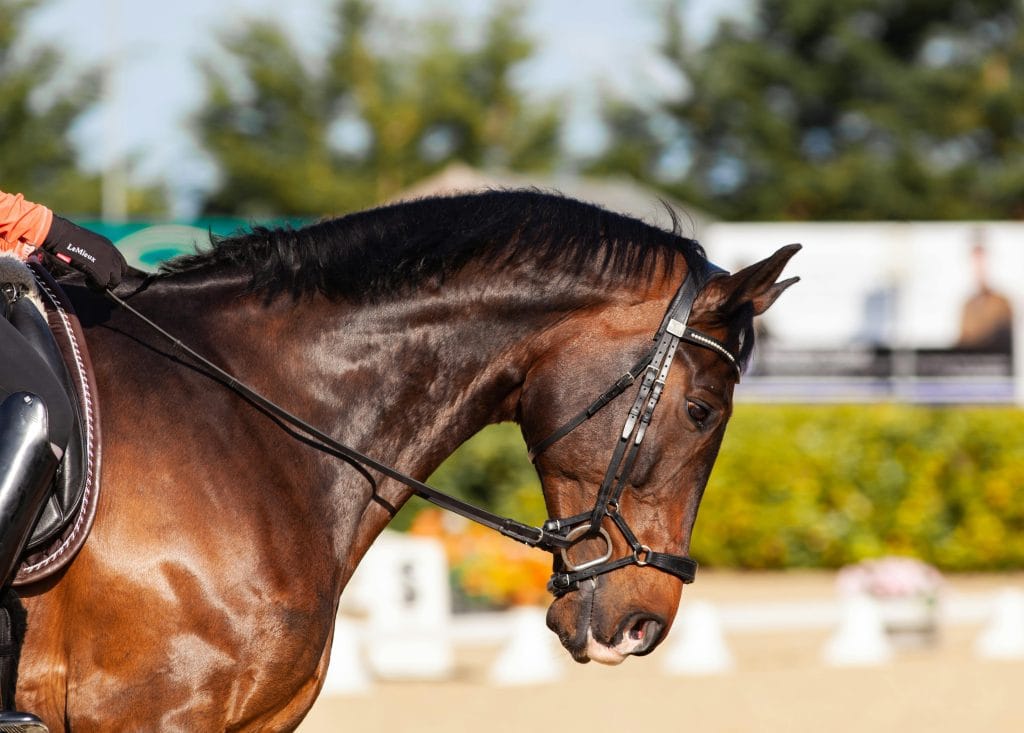
And when nothing a horse suggests ever matters, it stops suggesting.
The result isn’t a broken horse. It’s often a very compliant one. And those two things can look surprisingly similar. And it’s exactly the horse most people are taught to feel proud of.
3. “But My Horse Loves His Job”
I hear this often. And I want to take it seriously – because sometimes it’s genuinely true. But there’s a question underneath it: how do we actually know?
Does the horse come forward willingly when given a genuine choice? Does it show curiosity, initiative, the occasional opinion that actually changes what happens next? Or does it move quickly and precisely into the expected sequence – often before anyone even signals what comes next?
Because that second thing – the early anticipation, the smooth compliance – can look a lot like enthusiasm. And sometimes it genuinely is. Horses can find real satisfaction in familiar patterns, in knowing what comes next, in a handler they trust.
But sometimes it’s something else. A horse that learned, quite early, that getting ahead of the request is the safest way to avoid what happens when you don’t. Our horses are mostly born into this world. They don’t know another one. The fact that they’ve adapted to it well doesn’t automatically tell us whether it actually fits them.
That’s not a judgment. It’s just a question, worth asking.
4. Giving Your Horse a Say Means Losing Control?
And here’s the concern that almost always follows: if I give my horse more say, will it still listen when it really matters?
It’s a fair concern.
And the band stallion is the best answer I know.
Watch him in a functioning herd. He’s not controlling the mares. He doesn’t demand compliance. He lets them initiate movement. He follows their lead on everyday decisions. He gives the group room to breathe, to suggest, to shift direction. And yet – when he says it’s time to move on, they move. When he positions himself between the herd and something unfamiliar, they trust that. When things get genuinely tense, they follow him without negotiation.
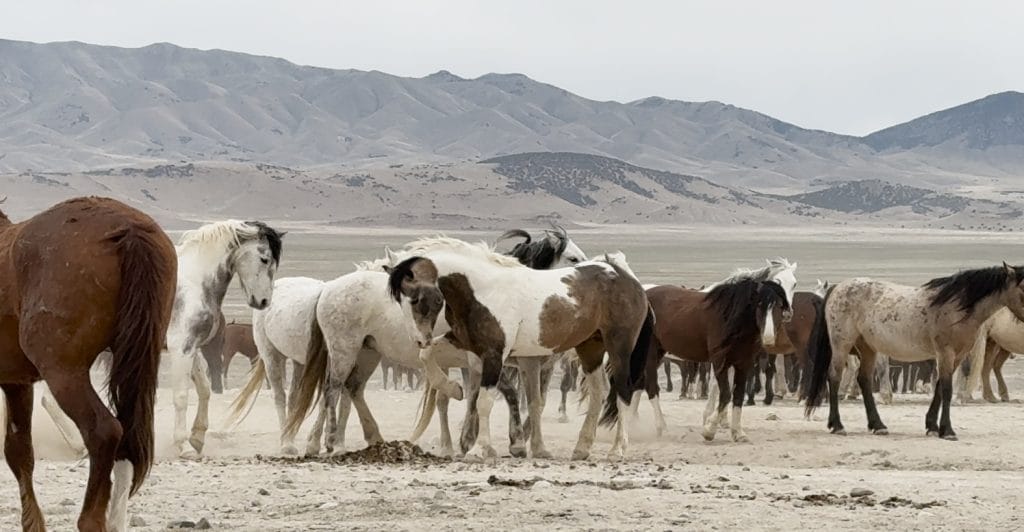
Not because he demanded it. Because he earned it. Through countless small moments of showing up, paying attention, and getting it right. His authority isn’t positional. It’s proven.
And that’s exactly what’s possible for us.
If we take on that same role – not controlling every moment but being genuinely reliable in the moments that matter – we can afford to give our horse a say. We can let it suggest a direction, initiate a pause, influence what happens next. And when we then say: now we need to move on – it will follow. Not because it has to. Because it has learned that our judgement is worth trusting.
That’s not dominance. That’s trustworthiness. And it changes our togetherness in a very meaningful way.
5. What That Can Look Like in Practice
Not removing everything. Not stopping all structure.
But shifting one thing: allowing the horse to influence the situation with its behavior – in the moments you’re together, and in the other 23 hours of its day.
In how they live.
If your horse lives with other horses in a real social group, something is already happening that you didn’t design. One lifts its head and focuses on something in the distance – and in an open, self-organized setting, others respond.
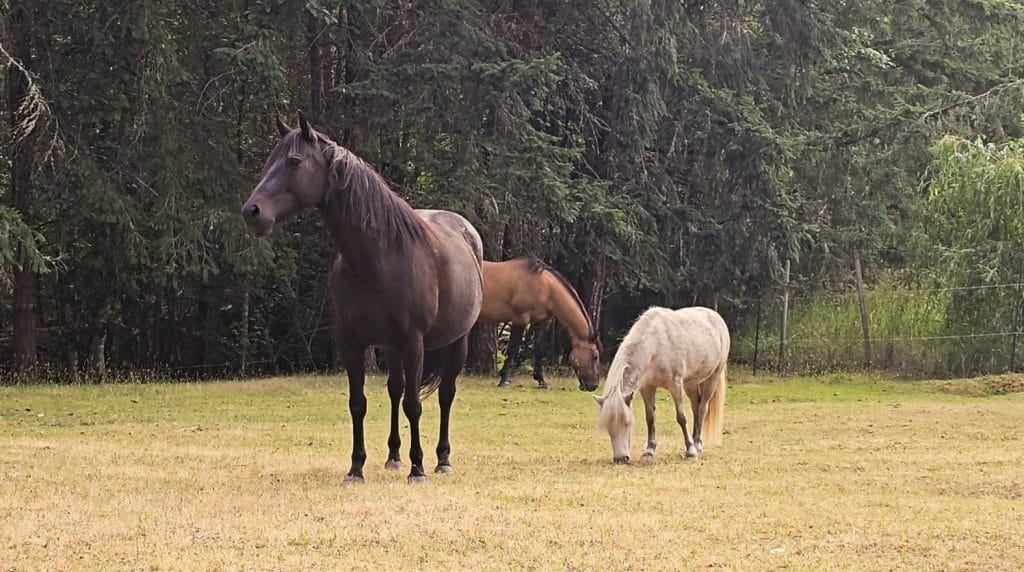
Movement happens. Direction shifts. In another setting, nothing happens – or the horse gets brought back to the task. The initial behavior is identical. What’s different is whether it means anything. That’s ‘embedded function’, right there in a domestic paddock. It doesn’t require wilderness. It requires other horses, enough space, and a setup that doesn’t constantly override what the horses are communicating to each other.
On the trail ride.
We determine the rough direction. But then we let the pace vary. We let a pause happen without immediately ending it. We let the horse’s attention go somewhere for a moment before gently bringing it back.
That rhythm – taking responsibility, releasing it, taking it again – is very close to how movement actually works within a wild band.
In the arena or on the ground.
The difference between two versions of the same hour isn’t about effort. It’s about whether there’s space for input.
Version A: constant correction, continuous expectation, every minute defined. The horse performs. Nothing it offers changes what happens.
Version B: phases of following us – and phases where the horse’s suggestion actually influences what we do next. A pause the horse initiates, and we allow. A moment where the horse’s read of the situation matters.
That’s not softness. That’s reciprocity.
6. What a Horse Actually Needs
So – does a horse need a job?
Not in the way we usually think about it.
What a horse needs is a role. Meaningful interaction. The possibility to influence outcomes with its own behavior – not always, but within the relationship. And a person who has proven, again and again, that their judgement is worth trusting.
When that’s in place, something shifts. The horse that used to scan constantly starts offering instead. The interaction becomes more mutual. More alive. And when something genuinely uncertain happens – when things get tense or unfamiliar – your horse stays with you. Not because it’s trained to. Because it trusts you.
That’s not a horse doing a job. That’s a horse with a role. And you – with a role.
A ‘job’ keeps a horse busy. A role makes a horse matter.
And those are not the same thing.
If understanding your horse this way feels right – and you want to go a little deeper – Beyond Behavior is a good place to start. Six short videos on horse character, two guides, and a meditation, $7
Or explore all Being Herd courses and resources here in the Shop.
I can’t wait to see you inside!
Recent Comments